
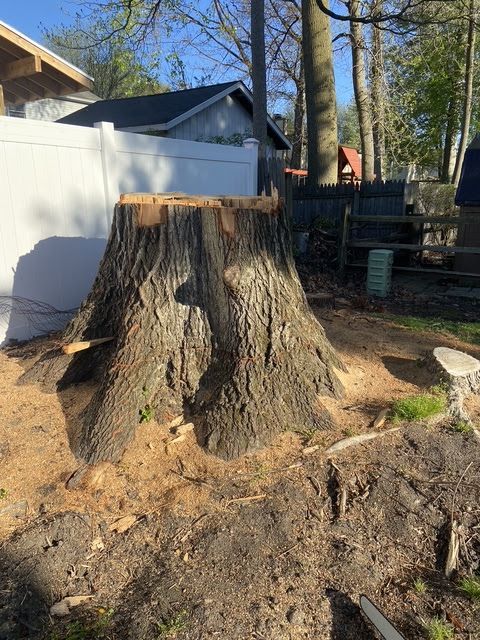
Property Cleared Without Disrupting Your Landscape
Residential Stump Grinding in Jackson for yards limited by leftover tree stumps
Stumps-B-Gone LLC removes tree stumps from residential properties in Jackson, Ann Arbor, Adrian, and surrounding areas using equipment specifically designed to fit through narrow gates and confined side yards. After a tree is removed, the remaining stump prevents you from mowing evenly, planting new landscaping, or using the full yard space. Grinding reduces the stump to wood chips several inches below ground level, eliminating the visible obstruction and allowing the area to be replanted or sodded.
The grinding process uses rotating carbide teeth to chip away wood down to the root crown, typically eight to twelve inches below the surface depending on the stump diameter and future plans for the area. This depth prevents regrowth and creates enough clearance for topsoil and grass without requiring excavation that damages adjacent trees, utility lines, or hardscaping. Stumps near property lines, driveways, and foundation plantings are accessible with specialized compact grinders that maneuver through spaces as narrow as thirty-six inches.
Schedule a property evaluation to determine equipment access and debris removal options for your specific stumps.
What Happens After Grinding Completes
Once the stump is ground, you're left with a mixture of wood chips and soil that fills the depression where the stump sat. This material can be raked level and covered with topsoil to create a planting bed, or it can be removed entirely if you're installing pavers or pouring concrete in that location. The wood chips decompose over time and actually improve soil structure, but they do settle as they break down, so most homeowners add soil and reseed after a few weeks.
Your yard becomes fully mowable without obstacles that damage mower blades or create uneven grass height. The grinding also removes habitat for carpenter ants, termites, and fungal growth that spread from decaying stumps to healthy trees and wooden structures. Properties with multiple stumps notice an immediate improvement in usable lawn area and visual consistency across the landscape.
Cleanup procedures vary based on your plans for the area—chips can remain as mulch for flower beds, be hauled away completely, or be partially removed and mixed with soil for grass establishment. The process does not disturb sprinkler lines or shallow utility runs when the grinder operator knows their location beforehand, which is why property owners should mark or identify any buried lines near the stump.
Questions Property Owners Usually Ask
Homeowners planning stump removal often want to know what the process involves and how it affects their landscaping plans.
Stumps-B-Gone LLC provides detailed site assessments that account for access points, underground utilities, and debris preferences. Request an estimate to address specific stumps limiting your Jackson property's appearance and functionality.
What size stumps can be ground in residential yards?
Stumps-B-Gone LLC handles stumps from small shrub root balls up to large oak and maple stumps exceeding four feet in diameter, with equipment selected based on stump size and yard access constraints.
How long does grinding typically take per stump?
Most residential stumps are ground in twenty to forty minutes depending on diameter, wood hardness, and root spread, though multi-stump properties benefit from scheduling a half-day service window.
What happens to the wood chips after grinding?
You can choose to have chips spread as mulch in planting areas, left in place to decompose and fill the hole, or removed entirely and hauled away as part of the service.
Why do stumps near structures need different equipment?
Stumps close to fences, foundations, or retaining walls require compact grinders with precise control to avoid impact damage, whereas open-yard stumps are processed more quickly with larger machines.
When is the best time to schedule stump grinding in Jackson?
Spring and fall allow for immediate lawn restoration with favorable grass-growing conditions, though stump grinding itself can be completed year-round as long as the ground is not frozen solid.