Sites Prepared for Construction and Landscaping
Stump Removal in Jackson for projects requiring complete root and obstruction extraction
Michigan soil conditions and seasonal freeze-thaw cycles cause tree roots to spread extensively, creating underground obstructions that interfere with foundation work, fence installation, and hardscape projects even after stumps are ground at the surface. Stumps-B-Gone LLC provides stump removal in Jackson, Grass Lake, Ann Arbor, and surrounding areas when complete extraction of the stump and primary root ball is necessary to prepare sites for construction or permanent improvements. This differs from standard grinding by removing below-ground mass that would otherwise remain and decompose over several years.
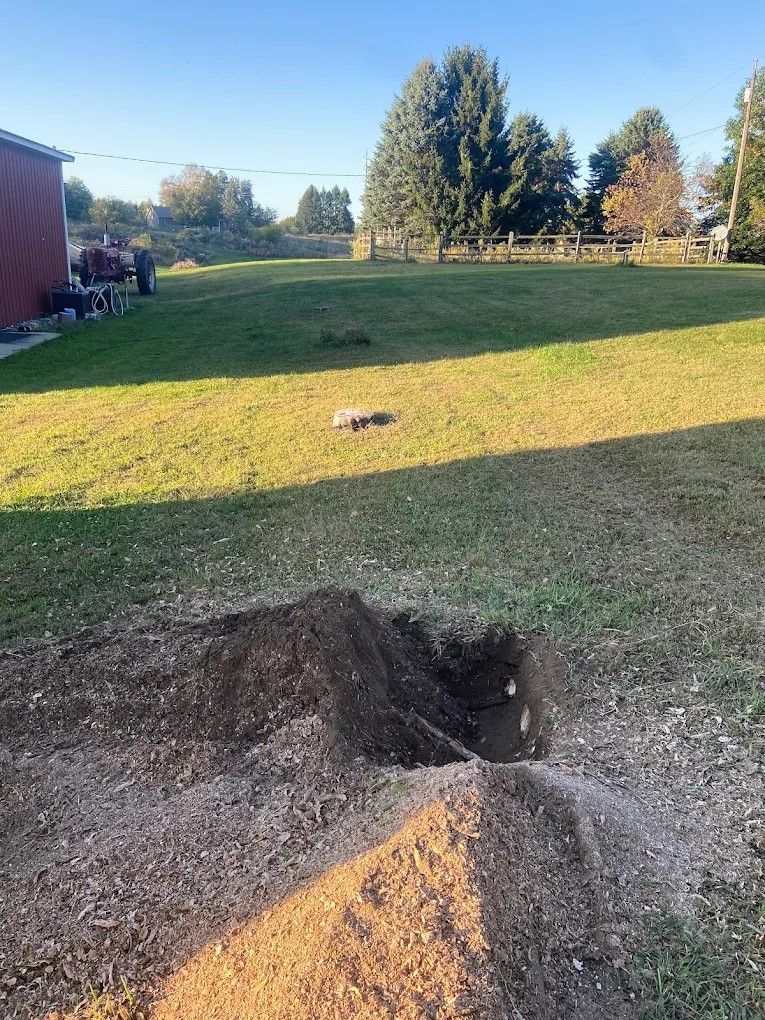
Removal becomes necessary when installing in-ground pools, pouring concrete slabs, trenching for utilities, or planting large specimen trees that require unobstructed root zones. The process involves mechanically loosening soil around the root ball, severing anchor roots, and extracting the stump in sections or whole depending on size and equipment access. The resulting void is backfilled with clean soil and compacted to prevent settling under structures or pavement.
Discuss stump removal options if your project requires verified clearance below typical grinding depth.
What Complete Stump Extraction Involves
Stump removal uses excavation equipment to expose the root system down to eighteen inches or deeper, depending on the tree species and project specifications. Oak and maple stumps develop extensive lateral roots that require cutting at multiple points to free the mass, while pine stumps typically have deeper tap roots but less lateral spread. The extraction creates a crater significantly larger than the original stump diameter, which must be filled and compacted properly to support weight and prevent future subsidence.
After removal, the site is left with confirmed clearance for footings, utility lines, or other subsurface installations that cannot tolerate decomposing wood or voids. Contractors appreciate knowing the area is genuinely clear rather than assuming grinding eliminated all obstructions, particularly when pouring concrete or installing drainage systems that fail if underlying soil settles unevenly.
Safe equipment operation protects adjacent landscaping, structures, and underground utilities by verifying clearances before excavation begins. Thorough site cleanup includes hauling root mass and excess soil, leaving the area ready for the next construction phase without requiring additional debris removal coordination. Removal does not suit every situation—properties prioritizing lawn restoration over construction often find grinding more cost-effective and less invasive.
Common Questions About This Service
Property owners distinguish between grinding and removal by understanding what each process accomplishes and when complete extraction justifies the additional cost.
Stumps-B-Gone LLC evaluates site conditions, project requirements, and access constraints to recommend whether grinding or full removal better supports your construction or landscaping goals. Contact the team to review your specific stump removal needs in Jackson.
What projects require full stump removal instead of grinding?
Fence post installation, concrete slab pouring, and underground utility trenching benefit from removal because subsurface roots interfere with digging and create voids as they decay.
How deep do roots extend on typical residential trees?
Most fibrous roots concentrate in the top twenty-four inches of soil, but structural anchor roots on mature oaks and maples extend three to four feet deep near the trunk before tapering.
What happens to the hole after stump extraction?
Stumps-B-Gone LLC backfills the void with screened topsoil, compacting in lifts to prevent settling, or leaves it open if the contractor prefers to backfill as part of their site preparation.
When should removal occur relative to other site work?
Extraction should happen early in the project timeline to allow soil settling and avoid conflicts with grading equipment, utility installation, or foundation crews working in the same area.
Why do Jackson properties sometimes encounter frozen ground issues?
Winter frost penetrates twelve to thirty inches deep in southern Michigan, making mechanical extraction difficult from December through March unless the site is excavated before freeze-up.