
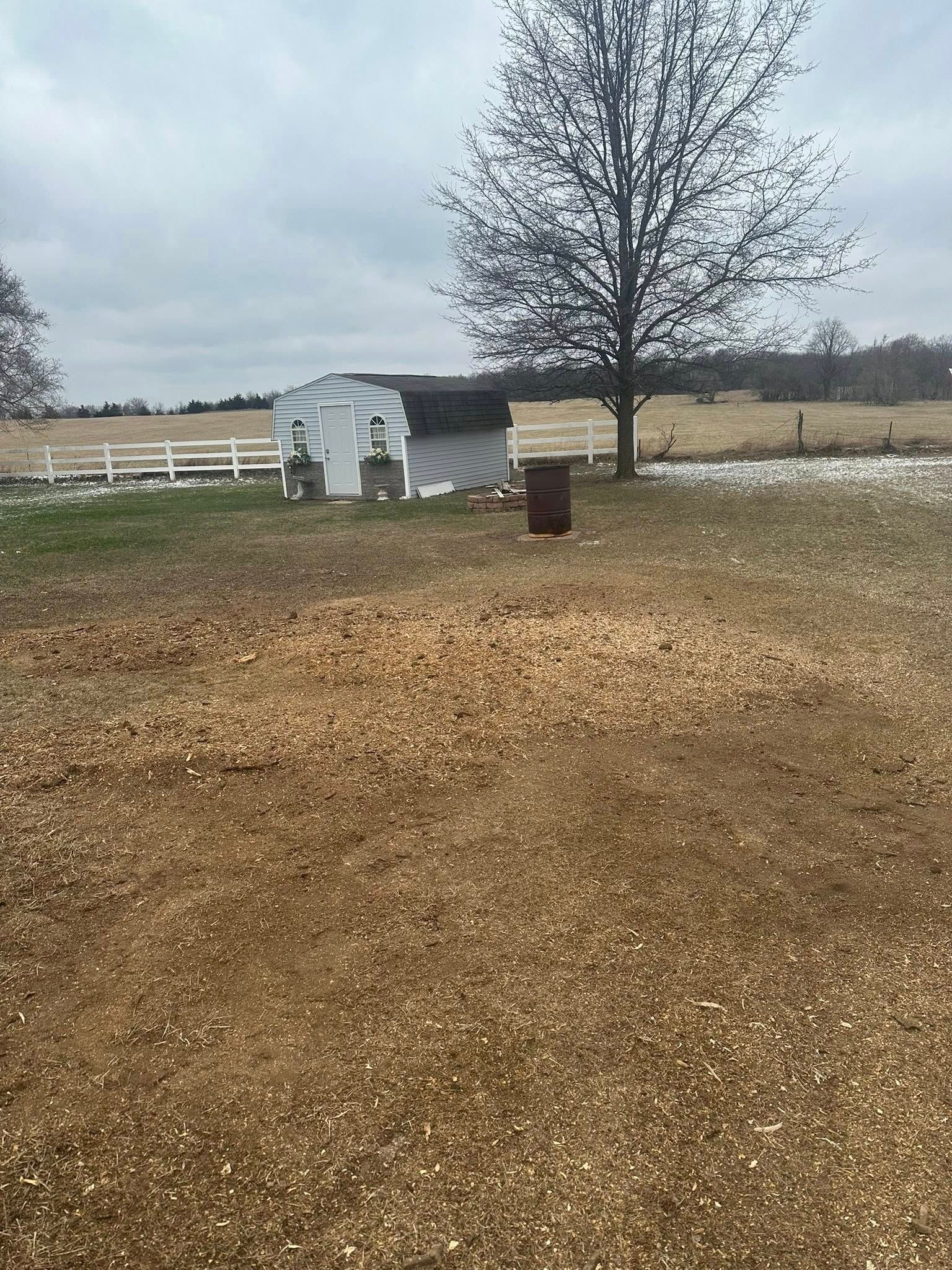
Lawns Leveled After Tree Stump Removal
Stump Grinding Yard Restoration in Jackson for properties transitioning from stump removal to usable lawn space
After grinding reduces a stump to wood chips below the soil line, the resulting depression and debris mixture require preparation before grass establishes evenly across the area. Stumps-B-Gone LLC addresses yard restoration in Jackson, Grass Lake, Adrian, and surrounding areas by leveling stump sites, adjusting soil composition, and preparing surfaces for seeding or sodding that integrates visually with existing turf. The restoration process converts stump locations from unusable, uneven patches into smooth lawn areas that support mowing, foot traffic, and landscape continuity.
Grinding leaves a mix of wood chips and displaced soil in the stump depression—material that settles and decomposes over time, creating low spots that collect water and prevent grass establishment. Restoration involves removing excess chips, adding topsoil blended to match existing lawn texture, and grading to create consistent drainage across the area. This preparation allows seed or sod to root into stable soil rather than fluctuating chip layers that dry out rapidly and inhibit grass growth.
Restore outdoor spaces following stump grinding with a site consultation that addresses soil conditions and seeding timelines.
How Stump Sites Become Functional Lawn Areas
Restoration begins by evaluating the wood chip depth and deciding whether to incorporate chips into the soil as organic matter or remove them entirely for faster grass establishment. Fine chips from softwood stumps decompose quickly and improve soil structure when mixed with topsoil and compost, while coarse hardwood chips are better removed because they create air pockets and nitrogen depletion that stunt grass growth. The decision depends on whether the homeowner prioritizes immediate lawn use or long-term soil improvement.
Once the site is leveled and topped with quality soil, grass seed germinates within seven to fourteen days under proper watering conditions, filling in the stump area to match surrounding turf density within six to eight weeks. The restored area becomes mowable at the same height as adjacent lawn without scalping or blade contact with subsurface wood, and the ground supports foot traffic without sinking or rutting. Properties with multiple stump sites notice unified lawn appearance and easier maintenance when all depressions are addressed simultaneously rather than over multiple seasons.
Attention to soil pH and drainage during restoration prevents dead patches or persistent wet spots that develop when stump sites are filled improperly. Recommendations for maintaining healthy lawn growth after service include watering schedules adjusted for new seed establishment and delaying heavy use until root systems anchor the soil, typically three to four weeks after germination in spring or fall conditions.
What Property Owners Usually Ask
Homeowners planning lawn restoration want clarity on timing, material choices, and realistic expectations for grass growth after stump grinding.
Stumps-B-Gone LLC provides guidance on soil selection, seeding methods, and maintenance practices tailored to your specific stump locations and lawn conditions. Plan your yard restoration by scheduling an evaluation that accounts for the number of stumps, existing turf type, and seasonal timing in Jackson and neighboring communities.
What soil depth is needed over the stump grinding area?
A minimum of four to six inches of quality topsoil allows grass roots to establish without encountering wood chips that inhibit growth, with additional depth beneficial for sod installation.
How soon can grass be planted after grinding?
Seeding or sodding can occur immediately after soil is placed and leveled, though waiting two to three weeks allows chips to settle and reveals low spots that need additional fill.
What's the difference between seeding and sodding stump sites?
Sod provides instant coverage and erosion control but costs more and requires consistent watering for two weeks, while seed costs less and establishes deeper roots but needs six to eight weeks to fill in completely.
Why do some stump areas sink after initial restoration?
Wood chips compact and decompose over the first growing season, creating settlement that requires adding soil and reseeding in those spots the following spring or fall.
When is the best time to restore stump sites in Jackson?
Spring from late April through May and fall from late August through September offer ideal temperatures and moisture for grass germination, avoiding summer heat stress and winter dormancy.